The story behind the set
The Raven, 1845 to 1875
A poem from New York, a translation from Paris, and four drawings in brushed ink.
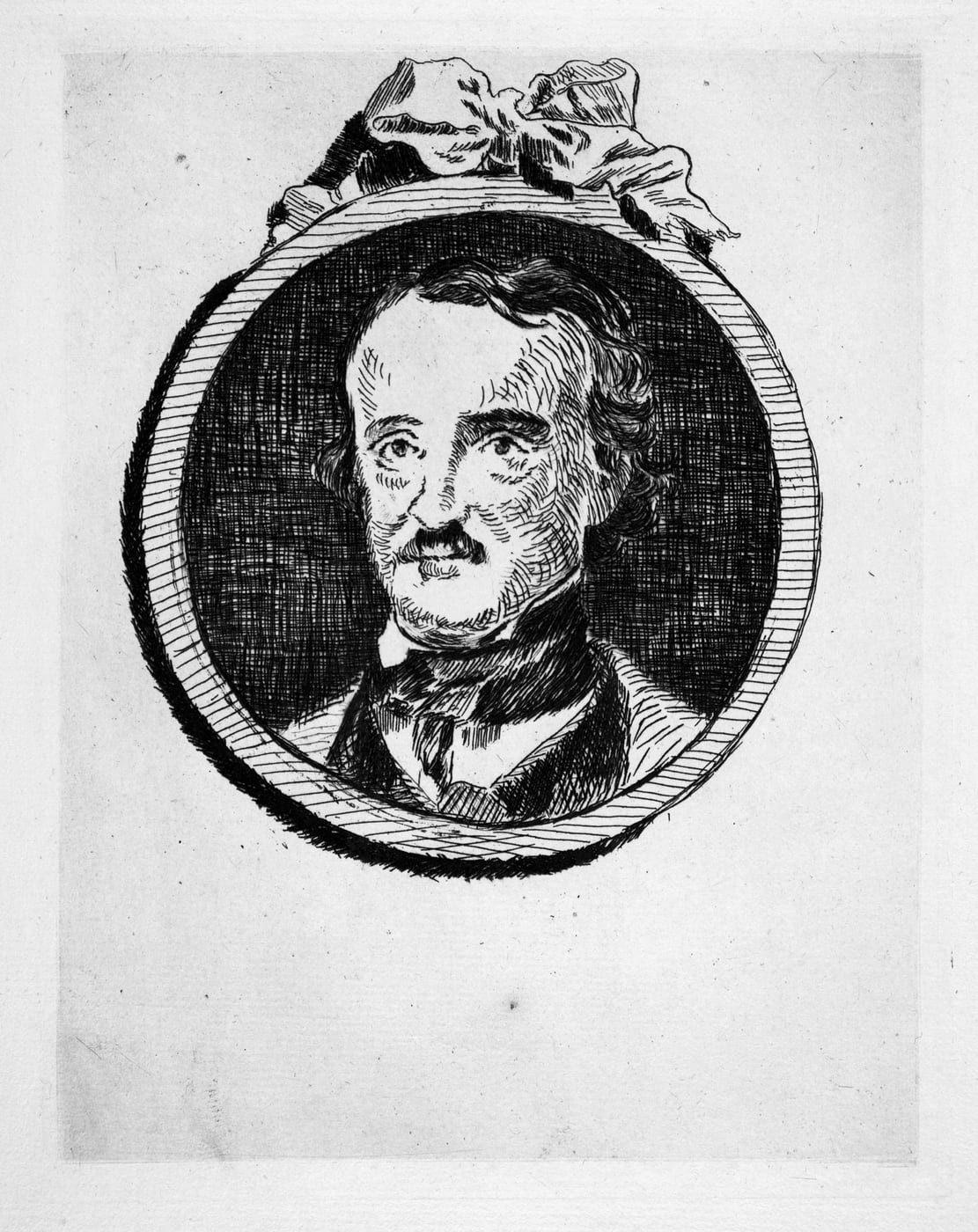
The poem
New York, January 1845
Edgar Allan Poe published The Raven in January 1845. A student sits up past midnight over old books, grieving for a woman he calls Lenore. Something taps at the door. When he opens the shutter, a raven steps in, settles on a bust of Pallas Athena above the door, and answers every question with one word.
The poem made Poe famous within weeks. It is built for reading aloud: eighteen stanzas of long, rolling lines, internal rhyme, and the single refrain that closes every stanza. Four years later Poe was dead, aged forty.
Once upon a midnight dreary, while I pondered, weak and weary,Over many a quaint and curious volume of forgotten lore
The translation
Paris, 1875
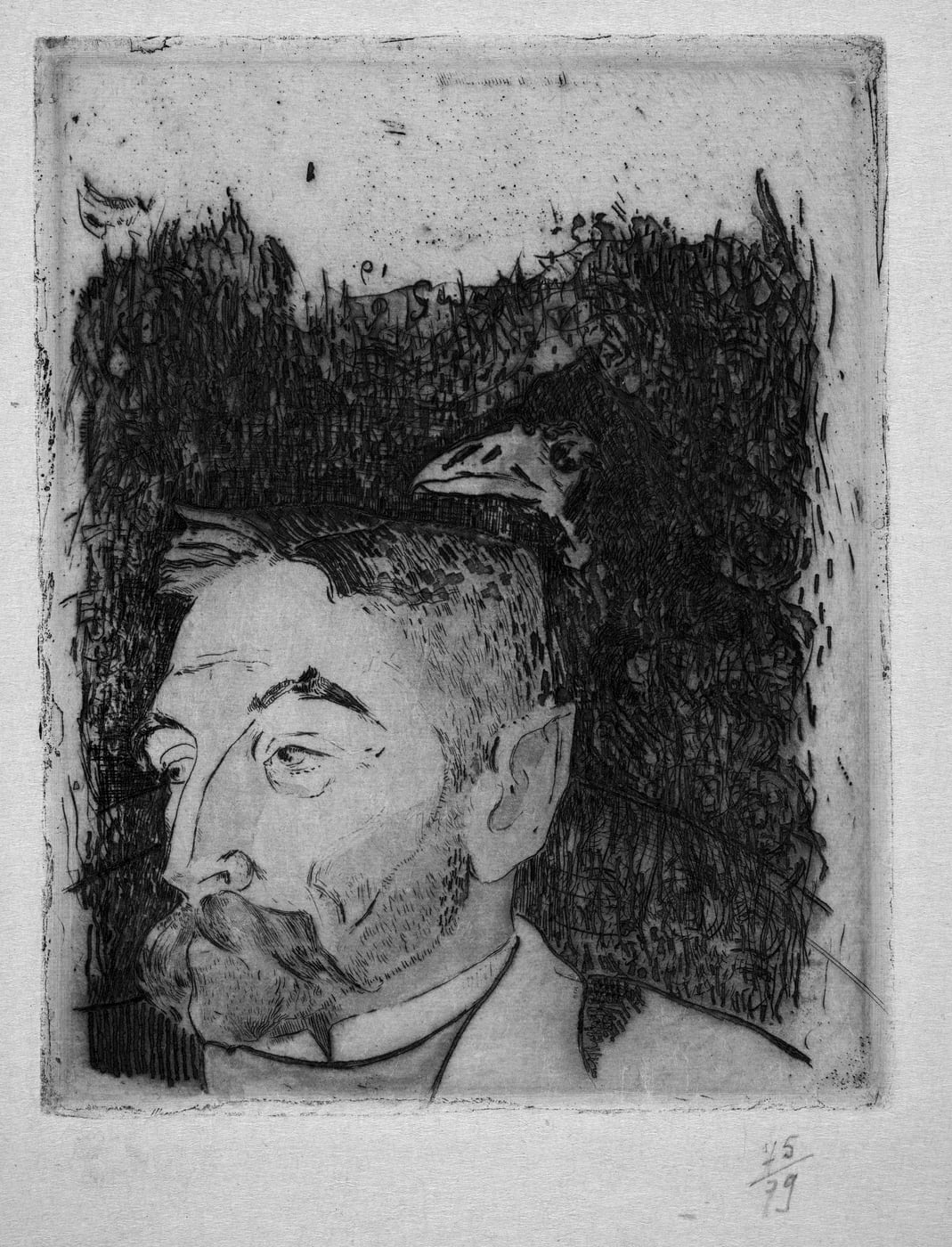
Poe was more admired in France than at home. Charles Baudelaire translated his tales through the 1850s and 1860s, and the poet Stéphane Mallarmé, who taught English for a living, spent years on Poe's poems.
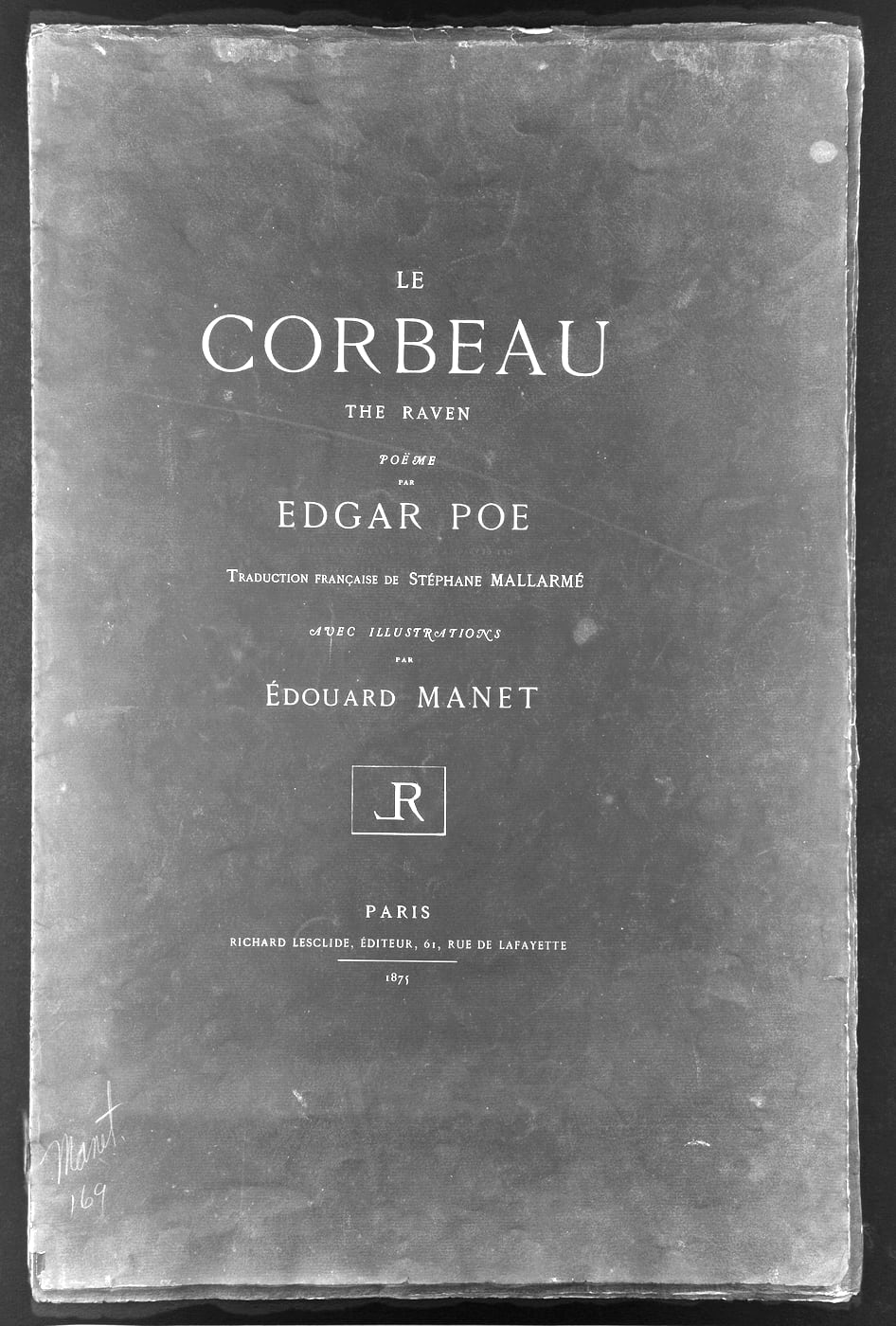
In 1875 Mallarmé published his French prose translation, Le Corbeau, as a large folio with the English text beside it. He asked his friend Édouard Manet, the painter, to illustrate it. The two had been close since about 1873; Mallarmé called at Manet's studio almost daily.
The plates
Four drawings in brushed ink
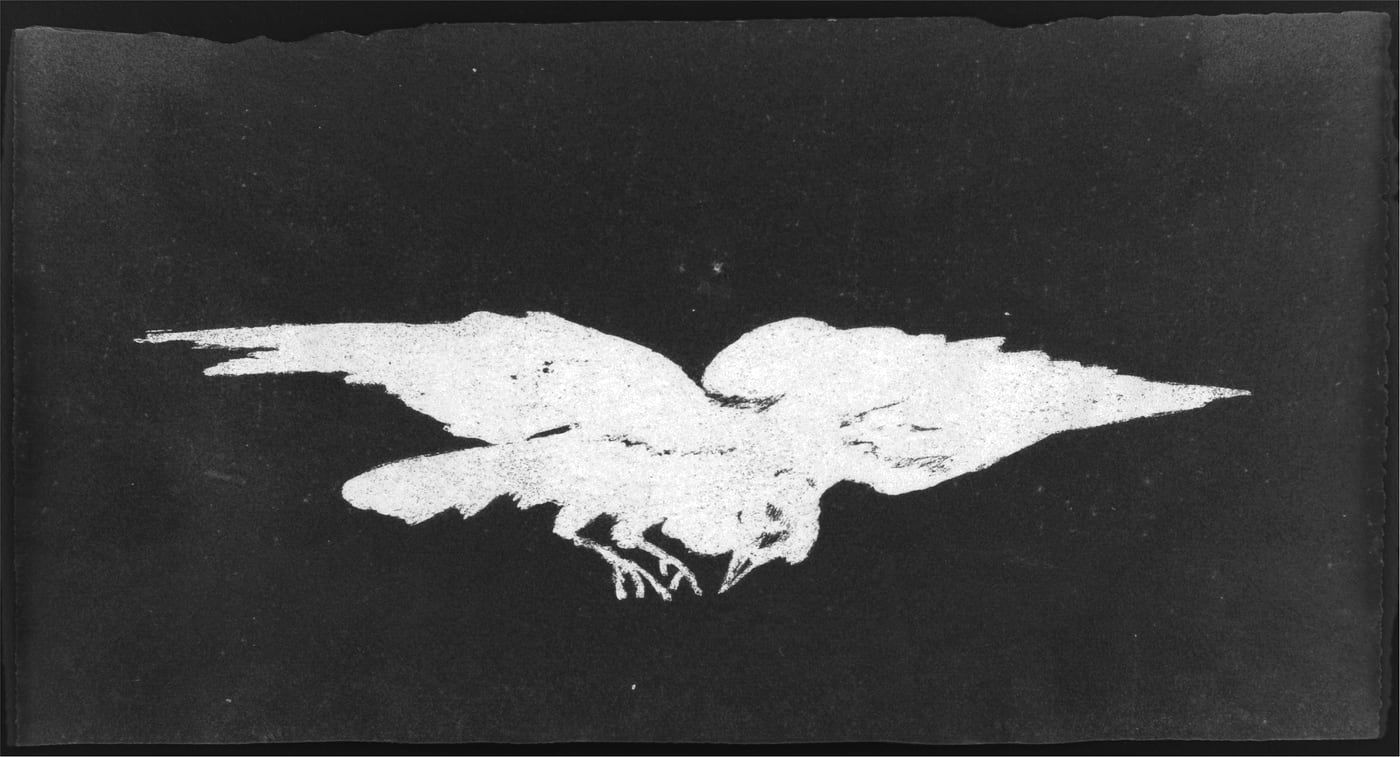
Manet made four full-page plates for Le Corbeau, plus a raven's head for the cover and poster and a flying raven for the bookplate. He drew them with a brush, in lithographic ink, on transfer paper: the drawing was pressed onto the printing stone, so what you see is the speed of his hand, not an engraver's copy of it.
They are almost all shadow. Manet leaves out nearly everything the poem describes and keeps the dark: a lamp, a window thrown open, a chair, and a shape on the floor. The raven is a few marks. That restraint is why they still look modern a century and a half later, and why they survive being turned to night.
The three plates in our set
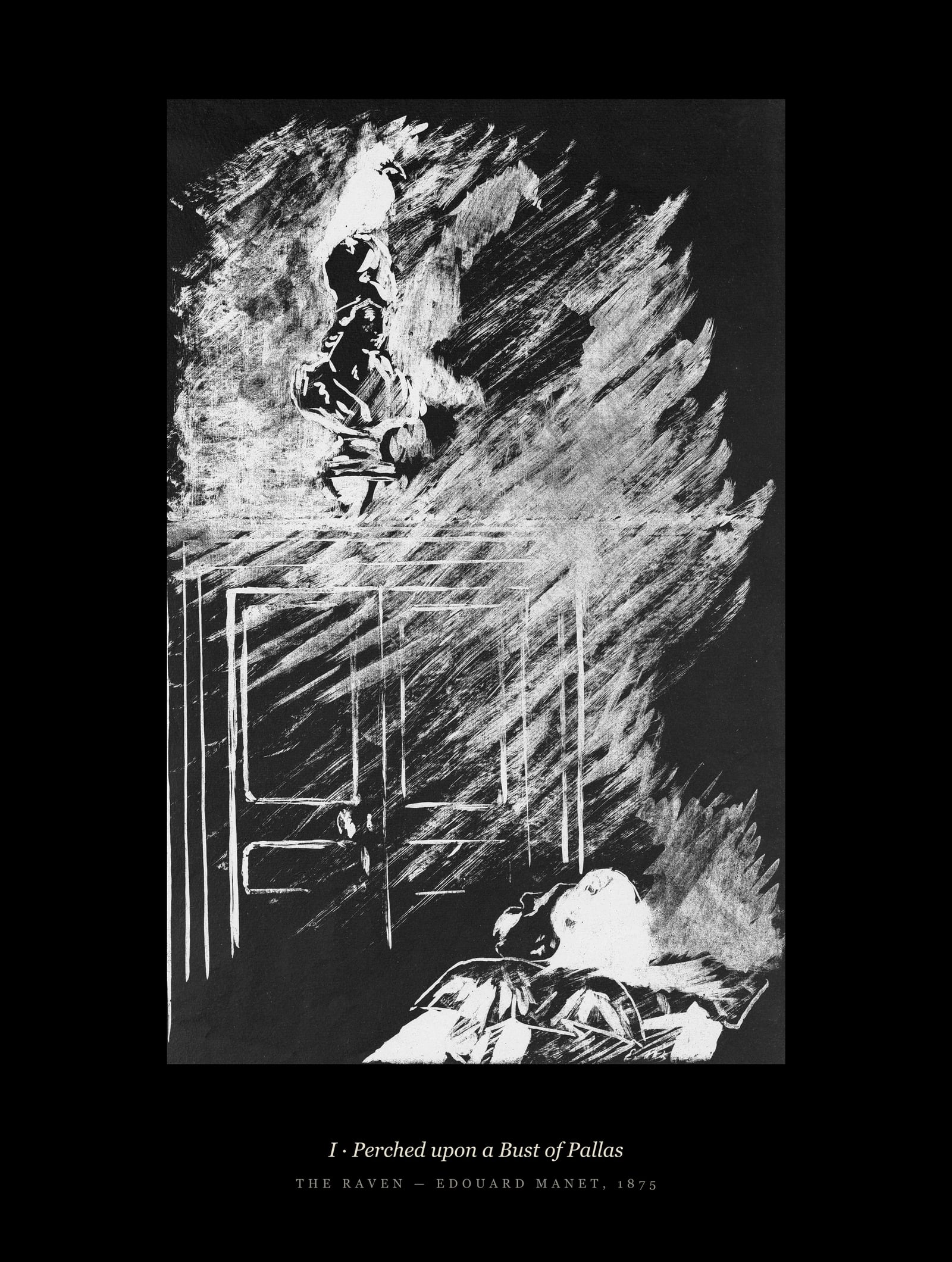
IPerched upon a Bust of Pallas
Read moreRead less
Perched upon a bust of Pallas just above my chamber door,Perched, and sat, and nothing more.
The raven sits on the bust in a storm of brushstrokes, the door below it ruled in a few quick lines. In the corner, the student slumps in the lamplight. Manet puts the bird high and small, so the room feels taller and the man smaller.
The Met, 24.30.27(3)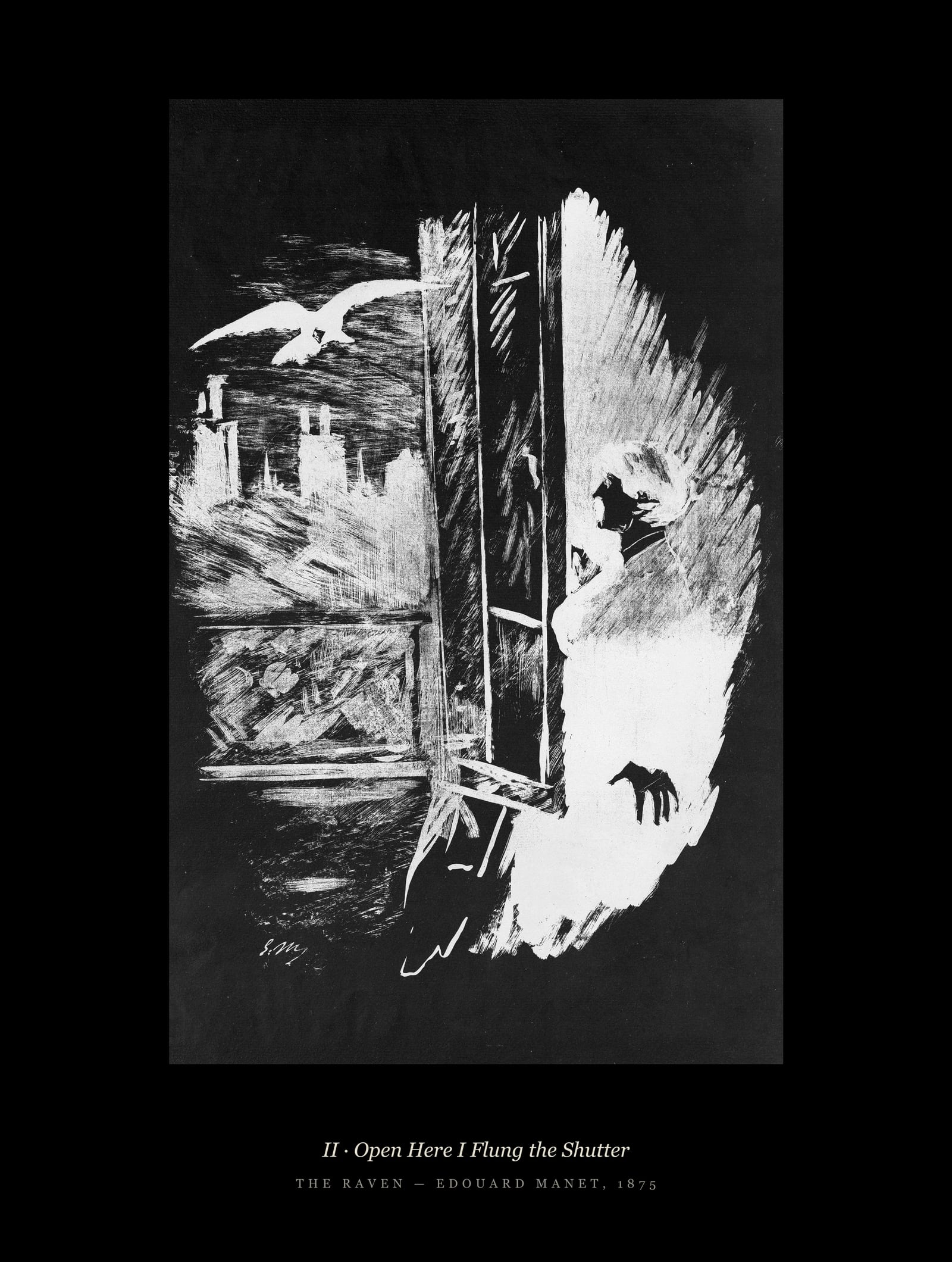
IIOpen Here I Flung the Shutter
Read moreRead less
Open here I flung the shutter, when, with many a flirt and flutter,In there stepped a stately Raven of the saintly days of yore.
The moment the bird arrives. The shutter swings in, the night outside is rooftops and chimneys, and the student is a silhouette at the window. It is the only plate that looks outward, and the most cinematic of the four.
The Met, 24.30.27(4)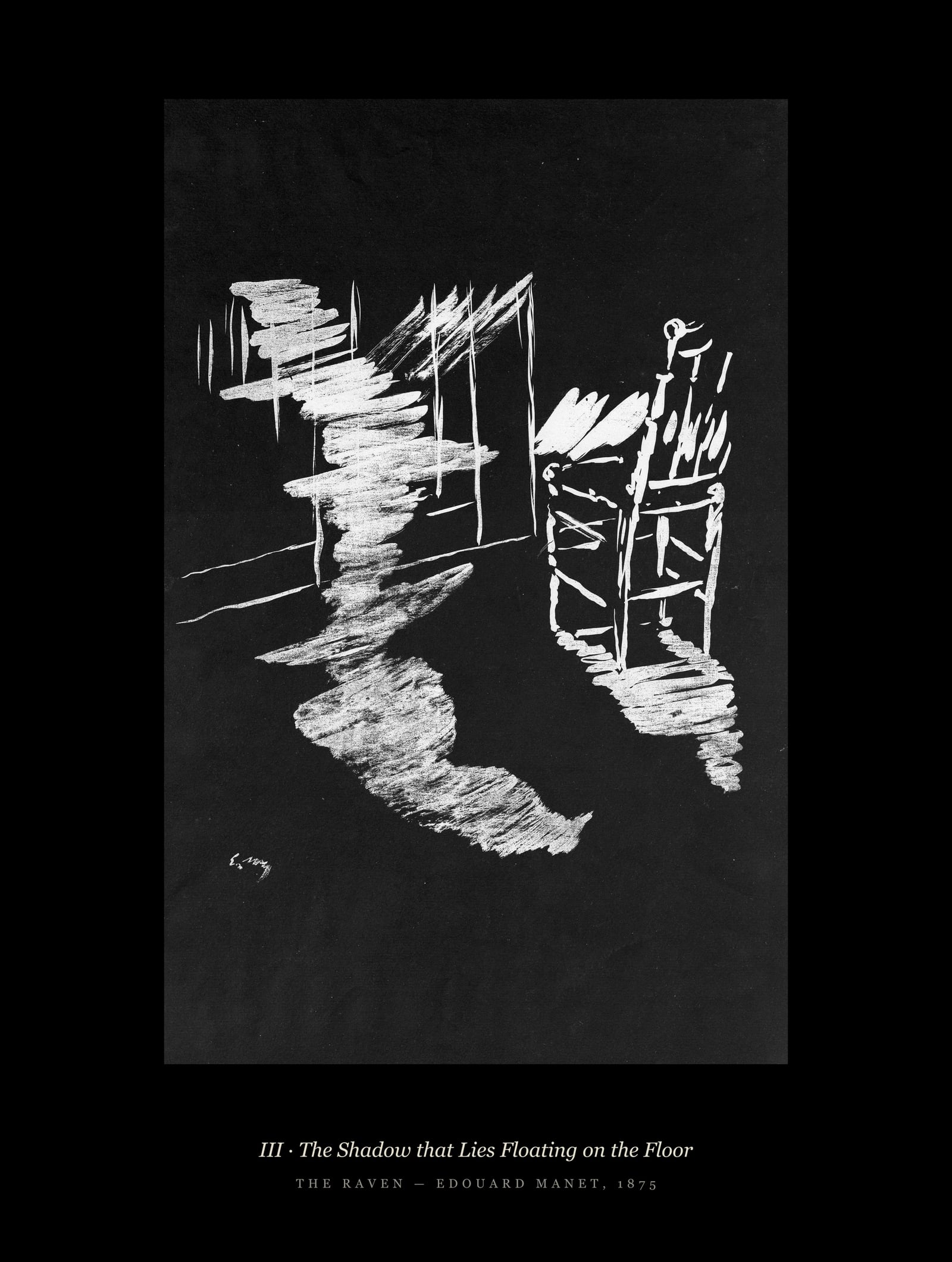
IIIThe Shadow that Lies Floating on the Floor
Read moreRead less
And my soul from out that shadow that lies floating on the floorShall be lifted, nevermore!
The last lines of the poem, drawn as an empty room: a chair, the light from the window and the bird's shadow pooled across the floor. No figure at all. Manet ends where Poe does, with the shadow that stays.
The Met, 24.30.27(5)
Also in the 1875 edition
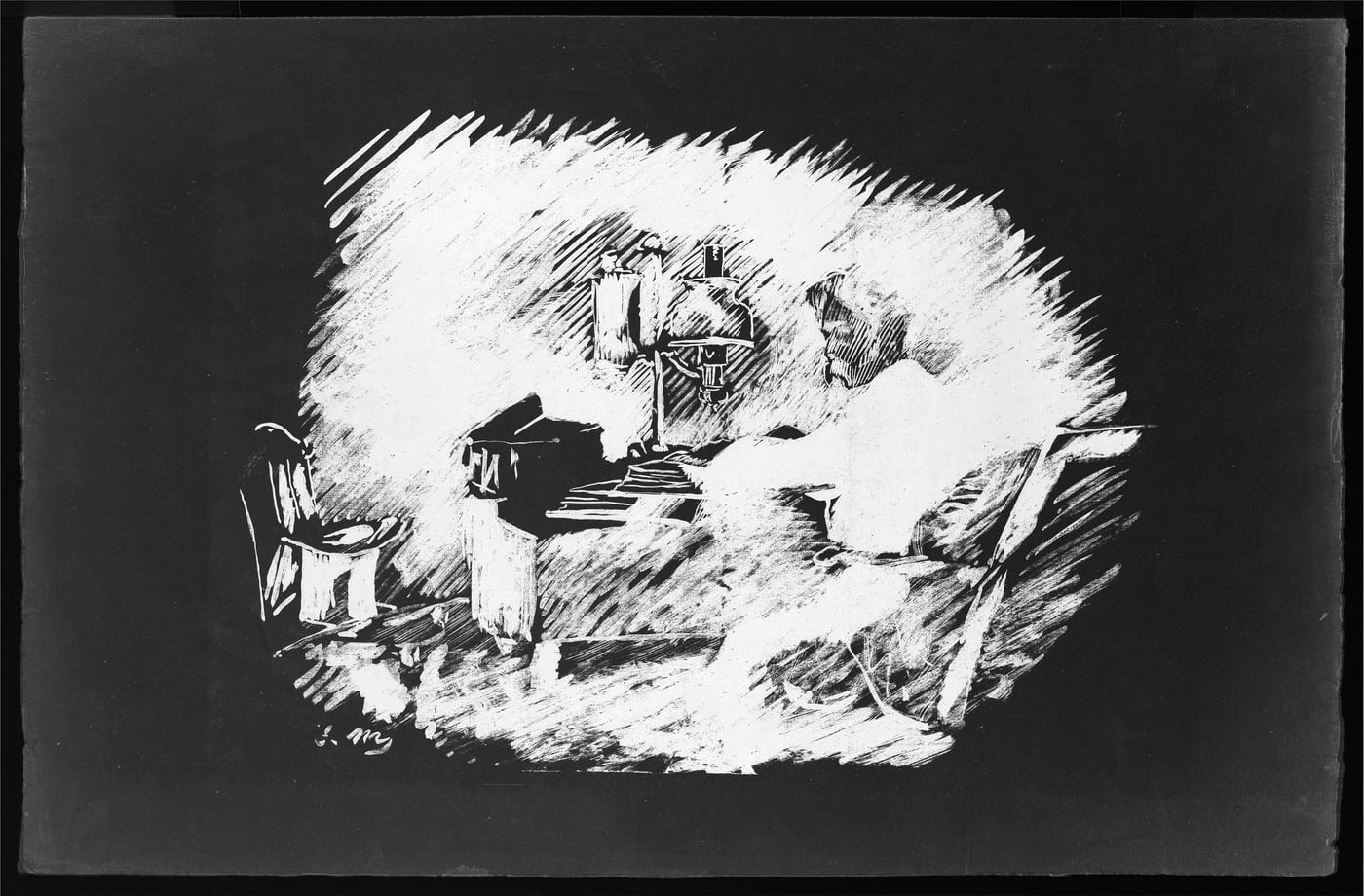
We print three of the four plates as a set, turned to night: the paper becomes black and the ink becomes bone. The fourth, the student alone at midnight, is the quietest of them, and we have left it in the book.
The Raven, set of three
AUD 170.95 · USD 99.00, delivery included
See the set